
One-minute protocol
The simple evidence-based protocol
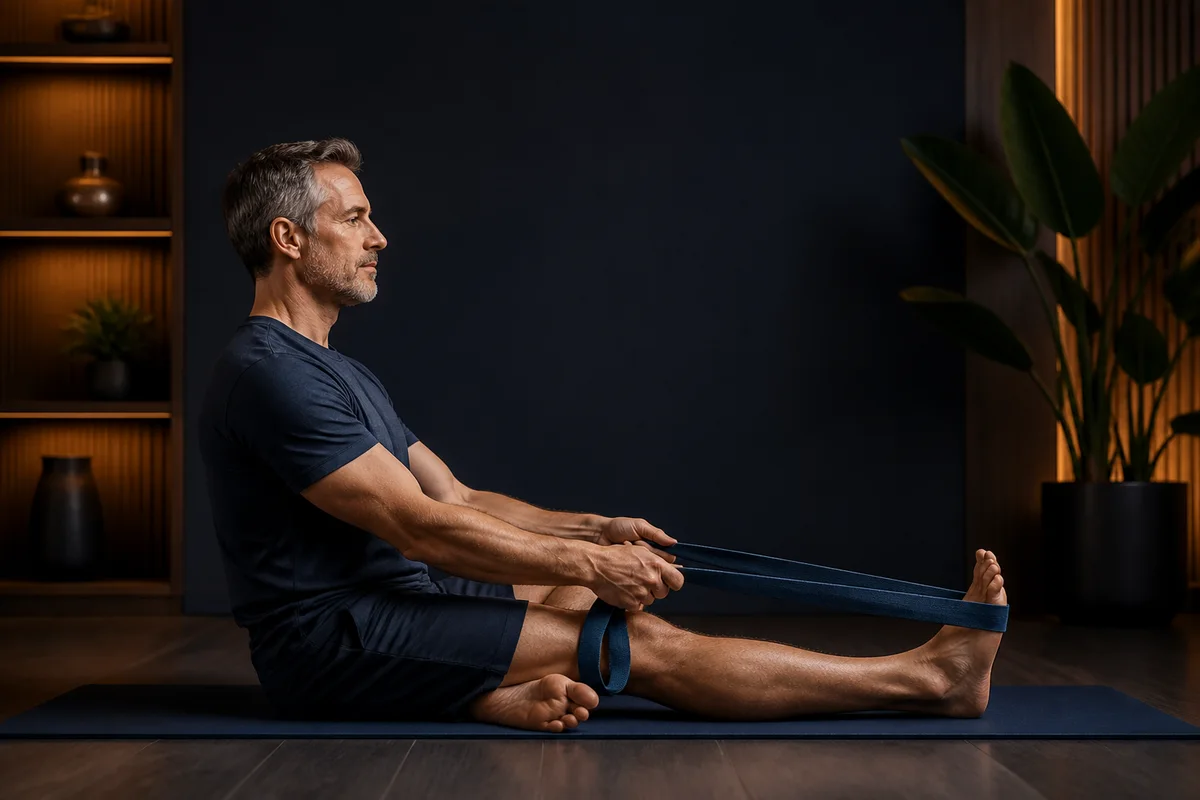
Choose 3-5 movements that match the ranges you actually need. After a general warm-up or at a separate time, accumulate about 60 seconds of static stretching per target muscle in 2-4 comfortable holds, at least 2-3 days each week. A practical chronic target is roughly 10 total minutes of static stretching per week across the program, then adjust by progress. Before speed, jumping or heavy lifting, favor dynamic movement and rehearsal; if using static holds, keep them brief and follow with active warm-up. Never bounce or force a painful, numb or unstable joint.See reference 1,See reference 2,See reference 3
The 10 rules to remember
- Flexibility is specific to the joint, direction and task you train.See reference 1
- Strength training through a controlled range can improve range of motion as much as stretching in some analyses.See reference 2
- Loaded full-range exercise is a valid flexibility tool when technique and tolerance are appropriate.See reference 3
- More range is not always better; useful range needs active control.See reference 4
- Prolonged static stretching immediately before explosive performance can produce small short-term decrements.See reference 5
- Stretching before or after exercise does not meaningfully prevent delayed-onset soreness.See reference 6
- Repeated static stretching improves flexibility, but effects on strength or muscle size depend on dose and context.See reference 7
- Stretching alone is not an established fall-prevention program.See reference 8
- Acute range gains are real but do not prove permanent tissue lengthening.See reference 9
- Physical-activity guidelines prioritize aerobic, strength and balance work; flexibility complements them.See reference 10
First principles: what this tool can actually change
Range of motion is constrained by joint anatomy, muscle-tendon properties, neural protection and tolerance to stretch. A short session often changes tolerance and nervous-system output before it changes tissue structure.See reference 1,See reference 2
Passive flexibility is the range an external force can create; active mobility is the range you can control. Training should eventually load and coordinate the new range so it transfers to life or sport.See reference 3,See reference 4
The ideal range is enough for the task without pain or instability. Chasing extreme positions that have no functional purpose adds exposure without a clear benefit.See reference 5,See reference 6
A practical protocol
- Stage
- Select
- What to do
- Choose 3-5 task-specific ranges
- Why it matters
- Avoids random full-body routinesSee reference 1
- Stage
- Warm
- What to do
- Use 5 minutes of easy movement first
- Why it matters
- Makes the session more comfortable and task-readySee reference 2
- Stage
- Stretch
- What to do
- 2-4 holds totaling about 60 seconds per target
- Why it matters
- Provides a repeatable starting doseSee reference 3
- Stage
- Control
- What to do
- Add slow active or loaded movement through the range
- Why it matters
- Converts passive range into usable capacitySee reference 4
Timing and frequency
- When
- Before power or strength
- Action
- Use dynamic movements; keep static holds brief and follow with rehearsalSee reference 5
- When
- After training
- Action
- Optional if it is convenient and comfortableSee reference 6
- When
- Separate session
- Action
- Best for longer static holds or a larger flexibility doseSee reference 7
- When
- Weekly
- Action
- At least 2-3 sessions; accumulate roughly 10 minutes across targets as a starting benchmarkSee reference 8
What to measure
- Signal
- Joint range
- How
- Same goniometer, distance or standardized movement
- Interpretation
- Track the specific direction trainedSee reference 7
- Signal
- Active control
- How
- Lift or hold the limb without assistance
- Interpretation
- Shows whether range is usableSee reference 8
- Signal
- Task quality
- How
- Squat depth, overhead reach or sport position
- Interpretation
- Function matters more than a generic toe touchSee reference 9
- Signal
- Symptoms
- How
- Pain, tingling, instability or next-day aggravation
- Interpretation
- Signals excessive dose or wrong targetSee reference 10
What the evidence supports
Recent meta-analysis supports moderate acute and large chronic improvements in flexibility from static stretching, with benefit plateauing as volume increases.See reference 1,See reference 3
Strength training performed through appropriate range can also improve flexibility, allowing time-efficient programs that build control and force together.See reference 2,See reference 4
Dynamic stretching and progressive rehearsal are better matched to immediate performance preparation than long passive holds alone.See reference 5,See reference 6
Evidence strength by claim
- Claim
- Improves the specific range of motion trained
- Confidence
- Strong
- Important boundary
- Transfer to untrained joints or tasks is limitedSee reference 1,See reference 2
- Claim
- Full-range strength training can improve flexibility
- Confidence
- Moderate
- Important boundary
- Technique and program design matterSee reference 3,See reference 4
- Claim
- Prevents soreness or all injuries
- Confidence
- Not supported as a stand-alone claim
- Important boundary
- Injury risk is multifactorialSee reference 5,See reference 6
- Claim
- Extreme flexibility improves health or longevity
- Confidence
- Not established
- Important boundary
- More range can add instability or injury exposureSee reference 7,See reference 8,See reference 9,See reference 10
Limitations and common overclaims
Dose-response estimates average many muscles, tests and populations. One weekly number cannot specify the perfect dose for every joint.See reference 3,See reference 7
Flexibility tests can improve through technique and tolerance, so a larger number does not automatically mean healthier tissue or better movement.See reference 5,See reference 8
People with hypermobility may need control and strength more than added passive range. Generic stretching advice can be counterproductive for them.See reference 9,See reference 10
How to make it stick
Pick one blocked task, identify the likely joint direction and train that range for four weeks before expanding the routine.See reference 1,See reference 2
Use a 0-10 intensity scale around 3-5: clear tension without sharp pain, shaking, breath-holding or guarding.See reference 3,See reference 4
Retest monthly rather than after every session. Once enough range is gained, maintain it with the lowest effective dose and loaded movement.See reference 5,See reference 6
Troubleshooting
- Problem
- No progress
- Likely issue
- Dose, target or measurement is inconsistent
- Better next step
- Standardize the test and add gradual volume or loaded rangeSee reference 2,See reference 3
- Problem
- Tingling or numbness
- Likely issue
- Neural tissue may be irritated
- Better next step
- Stop forcing the position and seek assessment if persistentSee reference 4,See reference 5
- Problem
- More flexible but unstable
- Likely issue
- Passive range exceeds active control
- Better next step
- Reduce end-range forcing and strengthen the rangeSee reference 6,See reference 7
- Problem
- Performance feels flat
- Likely issue
- Static holds are too long or too close to explosive work
- Better next step
- Move them later and add dynamic rehearsalSee reference 8,See reference 9,See reference 10
Safety and when to stop
Stretching should create tolerable tension, not sharp pain, joint pinching, numbness, tingling, weakness or a feeling that the joint will give way. Avoid forcing an acute injury, recently operated area, unstable joint or suspected fracture. People with connective-tissue disorders, neurologic symptoms or marked hypermobility should use individualized guidance. Stop and seek assessment for persistent neurologic symptoms, swelling, loss of strength or rapidly worsening pain.See reference 1,See reference 5,See reference 9
Who is most likely to benefit
Flexibility training is most useful when a measurable range limits a daily activity, exercise technique, comfort or sport position.See reference 2,See reference 4
People already able to perform their tasks comfortably may gain more from strength, balance, aerobic training or skill practice than extra passive range.See reference 5,See reference 7
Older adults can train flexibility safely, but fall prevention requires balance and functional strength rather than stretching alone.See reference 8,See reference 10
Track five things
- The exact joint and direction.See reference 1
- Hold time, sets and weekly minutes.See reference 2
- Stretch intensity without pain.See reference 3
- Active control in the new range.See reference 4
- Task improvement and adverse symptoms.See reference 5
Frequently asked questions
How long should I hold a stretch?
Accumulate about 60 seconds per target in comfortable holds; one exact hold length is less important than total tolerable dose.See reference 1
How often should I stretch?
At least 2-3 days per week is a practical start. More frequent short sessions can work if recovery and symptoms remain good.See reference 2
Should I stretch before lifting?
Use dynamic rehearsal first. Brief static work can be included for a specific restriction, followed by active warm-up sets.See reference 3
Is stretching after exercise necessary?
No. It is optional and does not meaningfully prevent soreness; use it when it helps range or relaxation.See reference 4
Can strength training improve flexibility?
Yes. Controlled resistance training through an appropriate full range can increase range of motion.See reference 5
Should stretching hurt?
No. Use clear but tolerable tension and stop for sharp, electric, numbing or unstable sensations.See reference 6
How quickly will flexibility improve?
Acute changes can appear immediately, while durable change usually needs consistent work over several weeks.See reference 7
Does flexibility training increase longevity?
No direct evidence shows that stretching itself extends lifespan; it supports movement when a range limitation exists.See reference 8
Connect the protocol to your wider health picture
LongevityMate helps organize measurements, habits, symptoms and trends so one tool stays in context instead of becoming the whole plan.
See how LongevityMate worksReferences
- 1. Optimising the Dose of Static Stretching to Improve Flexibility
Sports MedicineMeta-analysis
- 2. Strength training versus stretching for improving range of motion
HealthcareMeta-analysis
- 3. Resistance training induces improvements in range of motion
Sports MedicineMeta-analysis
- 4. Influence of resistance training on joint flexibility
Journal of Strength and Conditioning ResearchMeta-analysis
- 5. Acute effects of muscle stretching on performance and range of motion
Journal of Sports SciencesSystematic review
- 6. Stretching to prevent or reduce muscle soreness after exercise
Cochrane Database of Systematic ReviewsSystematic review
- 7. Chronic effects of static stretching interventions
Frontiers in PhysiologyMeta-analysis
- 8. Exercise for preventing falls in older people
Cochrane Database of Systematic ReviewsSystematic review
- 9. Acute Effects of Various Stretching Techniques on Range of Motion
Sports Medicine - OpenMeta-analysis
- 10. WHO guidelines on physical activity and sedentary behaviour
World Health OrganizationGuideline
Editorial transparency
- Published by
- LongevityMate Editorial Team
- Published
- Updated
Medical disclaimer
This guide provides general health education. It does not diagnose a condition, prescribe treatment, replace individualized medical care, or guarantee a health or longevity outcome.