
The short answer
Passionflower: Sleep Evidence and Safety explained
Passionflower may help some sleep or anxiety symptoms, but the human evidence is limited. Short studies of particular preparations do not establish a reliable treatment for chronic insomnia or an anxiety disorder. Drowsiness and important pregnancy and surgery precautions also matter.See reference 1,See reference 2,See reference 3
Which passionflower preparation?
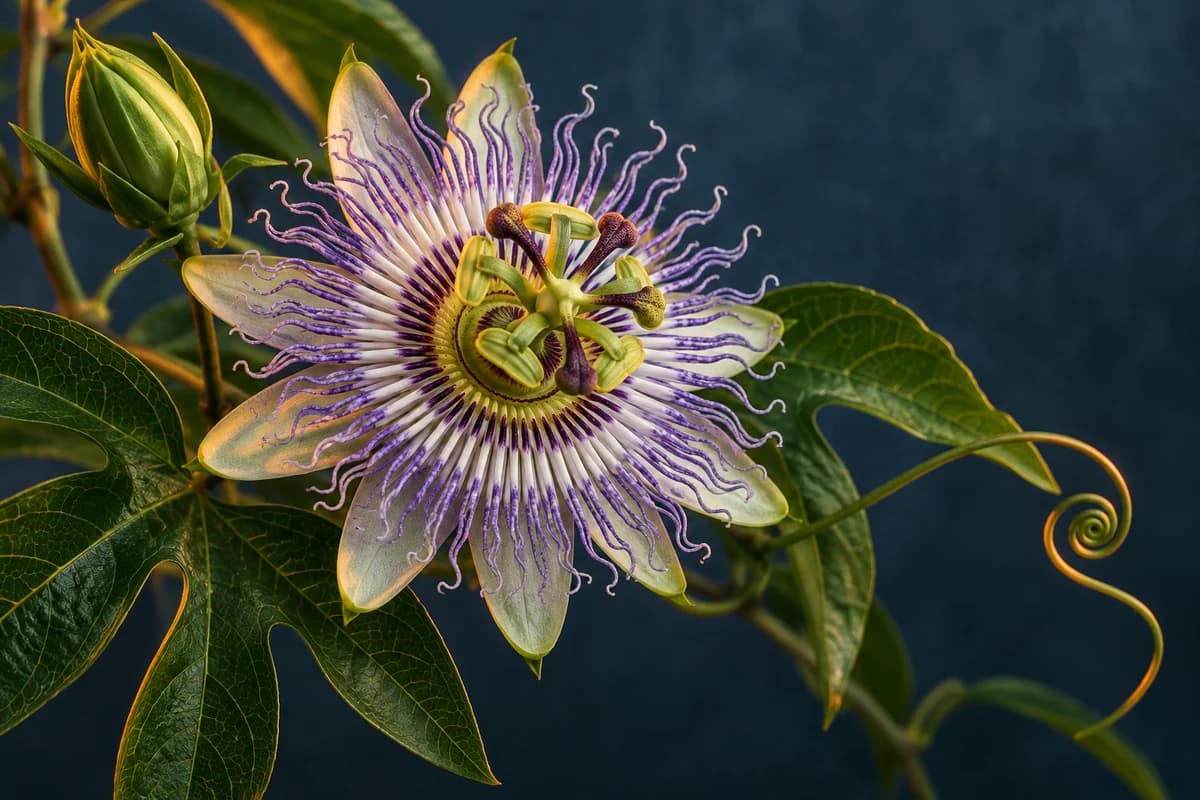
The relevant botanical is Passiflora incarnata. EMA’s assessment covers specified preparations of its dried above-ground parts, including teas, powders and extracts. It does not treat every passionflower species, passion fruit food or multi-ingredient blend as the same intervention.See reference 5
Sleep findings: signal versus certainty
- Study and exposure
- 2020 trial: 110 adults with insomnia; extract or placebo for 2 weeks
- Finding and limitation
- Total sleep time improved more with passionflower. Sleep efficiency and time awake after falling asleep did not differ significantly between groups.See reference 2
- Study and exposure
- 2024 trial: 65 participants with stress and insomnia; standardized extract for 30 days
- Finding and limitation
- Reported improvements in stress and sleep measures. A small, short study of one extract cannot establish long-term benefit for other products.See reference 3
- Study and exposure
- 2020 systematic review: 9 trials lasting 1–30 days
- Finding and limitation
- Different populations, preparations and outcome scales limit how confidently the results can be combined.See reference 4
Improvement within a group is not enough
In the 2020 insomnia trial, some measures improved from baseline in the passionflower group but were not better than placebo. The comparison between groups is the relevant test of an added treatment effect. A positive sleep-time finding does not make every sleep outcome positive.See reference 2
The 2024 trial reported no adverse effects during its 30-day observation. That is useful but cannot exclude uncommon harms or establish safety with prolonged use, pregnancy or interacting medicines.See reference 3
Anxiety evidence has a narrow reach
The systematic review found that many small trials reported reduced anxiety, but studies lasted at most 30 days and used varied tests. Research around a stressful procedure is not automatically evidence for managing a persistent anxiety disorder.See reference 4
NCCIH regards conclusions about anxiety as uncertain. It also cautions that passionflower can interact with anesthesia; a pre-procedure study is not an instruction to take it before surgery.See reference 1
Traditional use is a different evidence category
EMA’s public assessment describes relief of mild mental stress and support for sleep on a traditional-use basis. It explicitly says clinical trials were insufficient for firm conclusions. A traditional-use designation should therefore not be read as proof from large, convincing trials.See reference 5
Why there is no universal equivalent dose here
A tea, liquid extract and dry extract can differ in how the plant is prepared. EMA describes extraction with a solvent and different resulting preparations. A milligram amount for one extract is not a general instruction for another product.See reference 5
The summaries reviewed here do not establish a single effective dose for all commercial products. Record the exact botanical, plant part, preparation and other ingredients before comparing a label with a study. This page does not recommend a personal dose.See reference 2,See reference 3,See reference 5
Safety and medicine checks
Possible effects include sleepiness, dizziness and confusion. Tell the care team about passionflower before surgery because combining it with anesthesia or other perioperative medicines may overly suppress the nervous system.See reference 1
NCCIH advises against use during pregnancy because uterine contractions may occur. Breastfeeding safety is poorly understood. Check medicines and individual circumstances with a pharmacist or clinician before use.See reference 1
A quality seal does not prove the benefit
Independent product testing can help assess identity, composition and contaminants. It does not guarantee that a supplement works or is safe for a particular person. A blend also introduces ingredients not tested as passionflower alone.See reference 5,See reference 6
Questions worth asking before buying
- Does the study test this botanical and preparation, or a different product?See reference 3,See reference 5
- Was the improvement greater than placebo, and was it an outcome that matters to me?See reference 2
- Have pregnancy, medicines, sedation and planned procedures been considered?See reference 1
- What is the plan for persistent symptoms instead of repeatedly adding supplements?See reference 6
Common questions
Is passionflower tea equivalent to an extract?
No universal equivalence is established. Preparation and concentration differ, and findings belong to the product studied.See reference 5
Is it proven for chronic insomnia?
No reliable long-term conclusion follows from the short trials reviewed here. The evidence suggests possible benefits that need stronger confirmation.See reference 2,See reference 3,See reference 4
Does natural mean safe?
No. Side effects and interactions remain possible, even when the plant has a long history of use.See reference 1,See reference 6
References
- 1. Passionflower: Usefulness and Safety
NCCIHOfficial guidance
- 2. Effects of Passiflora incarnata on polysomnographic sleep parameters in insomnia
International Clinical PsychopharmacologyRandomized trial
- 3. Passiflora incarnata in participants with stress and sleep problems: randomized trial
CureusRandomized trial
- 4. Passiflora incarnata in Neuropsychiatric Disorders: A Systematic Review
NutrientsSystematic review
- 5. Passiflorae herba: summary and assessment
European Medicines AgencyOfficial guidance
- 6. Dietary Supplements: What You Need to Know
NIH Office of Dietary SupplementsOfficial guidance
Editorial transparency
- Published by
- LongevityMate Editorial
- Published
- Updated
Medical disclaimer
General education only. This guide does not diagnose a condition, select treatment or recommend a supplement dose. Discuss your own results, symptoms and medicines with a qualified health professional.