
One-minute protocol
The simple evidence-based protocol
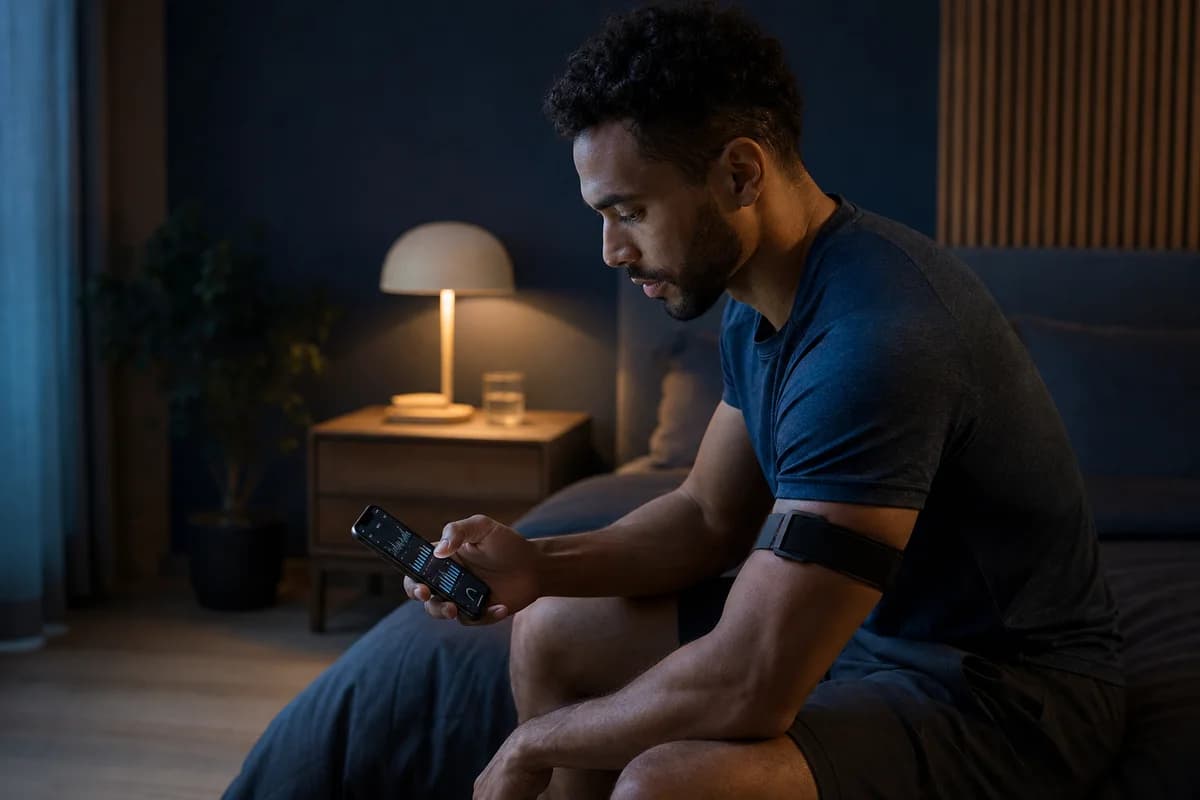
Wear WHOOP snugly and consistently, preferably in the same position, and collect 14-28 days before treating its baseline as meaningful. Review seven-day trends in sleep opportunity, resting heart rate, HRV and training load alongside mood, soreness and actual performance. Use Recovery and Strain to ask better questions, not to obey a red, yellow or green score. Reduce load or seek care when objective decline, symptoms and repeated abnormal trends agree—not because of one color alone.See reference 1,See reference 2,See reference 3
The 10 rules to remember
- Collect 14-28 days of representative data before interpreting Recovery trends.See reference 1
- Wear the sensor snugly in a consistent location and follow current placement instructions.See reference 2
- Use weekly trends rather than a single red or green day.See reference 3
- Compare HRV only with your personal baseline and the same measurement context.See reference 4
- Treat Strain as a proprietary load estimate, not a direct measure of tissue damage or adaptation.See reference 5
- Check whether sleep opportunity, alcohol, illness, travel or hard training explains a change before acting.See reference 6
- Judge the device against performance, symptoms and behavior—not engagement with the app.See reference 7
- Do not use consumer sleep stages to diagnose insomnia, apnea or another sleep disorder.See reference 8
- Do not let a green score override pain, fever, chest symptoms or severe fatigue.See reference 9
- There is no evidence that WHOOP membership itself extends lifespan or prevents injury.See reference 10
First principles: what this tool can actually change
WHOOP uses optical pulse sensing and movement to infer heart rate, HRV, sleep and activity. These signals are most stable during low-motion periods; exercise type, placement, skin contact and rapid heart-rate change can increase error.See reference 1,See reference 2
Recovery and Strain are transformations of measured and self-reported inputs using undisclosed or changing algorithms. A score can be internally consistent without being a clinically validated measure of readiness, adaptation or safe training dose.See reference 3,See reference 4
The useful question is whether repeated wearable changes align with how you feel and perform. Agreement across independent signals increases confidence; disagreement is a reason to investigate, not force the story to fit the score.See reference 5,See reference 6
A practical protocol
- Stage
- Set up
- What to do
- Use correct placement and wear continuously through typical weeks
- Why it matters
- Reduces gaps and placement-driven variationSee reference 1
- Stage
- Baseline
- What to do
- Observe 14-28 days without chasing daily colors
- Why it matters
- Captures personal variabilitySee reference 2
- Stage
- Review
- What to do
- Compare seven-day HRV, resting HR, sleep and load with symptoms
- Why it matters
- Requires convergence before actionSee reference 3
- Stage
- Experiment
- What to do
- Change one recovery or training behavior for 2-4 weeks
- Why it matters
- Tests whether data improve a real outcomeSee reference 4
Timing and frequency
- When
- Continuously
- Action
- Wear as directed and charge without creating long gapsSee reference 5
- When
- Each morning
- Action
- Log major context honestly but avoid score-driven ruminationSee reference 6
- When
- Once weekly
- Action
- Review median trends, training completion and subjective recoverySee reference 7
- When
- Every 4 weeks
- Action
- Decide whether the device is improving decisions enough to justify cost and attentionSee reference 8
What to measure
- Signal
- Overnight HR and HRV
- How
- Use rolling personal values during stable wear
- Interpretation
- More defensible than universal targetsSee reference 7
- Signal
- Sleep opportunity
- How
- Compare time in bed and estimated total sleep
- Interpretation
- Stage detail is less certainSee reference 8
- Signal
- Training load
- How
- Compare Strain with session type, duration and performance
- Interpretation
- Proprietary and not interchangeable with external loadSee reference 9
- Signal
- Subjective recovery
- How
- Track fatigue, soreness, mood and motivation
- Interpretation
- Essential independent comparisonSee reference 10
What the evidence supports
Studies support useful overnight heart-rate and HRV measurement under controlled or low-motion conditions, while agreement can deteriorate during movement and depends on the comparison method.See reference 1,See reference 3
WHOOP can estimate sleep timing and duration well enough to reveal broad habits for some users, but stage classification and wake detection are not consistently laboratory-equivalent.See reference 2,See reference 4
Continuous feedback may support awareness and adherence, but evidence for proprietary Recovery-guided training improving injury, performance or long-term health outcomes remains limited.See reference 5,See reference 6
Evidence strength by claim
- Claim
- Tracks overnight HR and selected HRV metrics
- Confidence
- Moderate
- Important boundary
- Use consistent low-motion measurementsSee reference 1,See reference 2
- Claim
- Estimates broad sleep patterns
- Confidence
- Low to moderate
- Important boundary
- Stages and wake periods can be misclassifiedSee reference 3,See reference 4
- Claim
- Recovery score identifies ideal training dose
- Confidence
- Not established
- Important boundary
- Algorithm is proprietary and outcome evidence is limitedSee reference 5,See reference 6
- Claim
- WHOOP prevents injury or improves longevity
- Confidence
- Not established
- Important boundary
- No direct causal evidenceSee reference 7,See reference 8,See reference 9,See reference 10
Limitations and common overclaims
Consumer-wearable validation studies are often small, short and conducted in controlled settings. Accuracy during real training, across skin tones, body positions and sports may differ.See reference 3,See reference 7
Product algorithms, sensor generations and membership features change. A paper on one version cannot validate every current metric or coaching message.See reference 5,See reference 8
A subscription encourages ongoing engagement, which can be helpful or can turn normal variability into anxiety. The value test is better decisions and outcomes, not a longer data streak.See reference 9,See reference 10
How to make it stick
Predefine a rule such as: reduce the next hard session only when two days of trend change align with symptoms or a performance drop.See reference 1,See reference 2
Use session RPE, volume, pace or power beside Strain so you retain an interpretable training record if the algorithm changes.See reference 3,See reference 4
Run a monthly utility check: identify one decision the device improved; if none, simplify alerts, hide scores or stop the subscription.See reference 5,See reference 6
Troubleshooting
- Problem
- Exercise heart rate looks wrong
- Likely issue
- Motion, placement or rapid transitions
- Better next step
- Tighten placement and compare with a chest strap when accuracy mattersSee reference 2,See reference 3
- Problem
- Red Recovery but you feel good
- Likely issue
- Normal variability or algorithmic weighting
- Better next step
- Use the planned session as a controlled check, not blind obedienceSee reference 4,See reference 5
- Problem
- Green Recovery but you feel unwell
- Likely issue
- Score cannot exclude illness or injury
- Better next step
- Prioritize symptoms and appropriate careSee reference 6,See reference 7
- Problem
- Data causes compulsive checking
- Likely issue
- Feedback is harming behavior
- Better next step
- Reduce notifications, hide scores or stop useSee reference 8,See reference 9,See reference 10
Safety and when to stop
WHOOP is a consumer wellness device, not emergency monitoring. Do not train through chest pain, fainting, severe breathlessness, fever, new neurologic symptoms or a sustained irregular or unusually fast heartbeat because Recovery is green. Seek urgent care for emergency symptoms regardless of the app. Remove or reposition the band for skin breakdown, numbness or swelling and follow sport-specific jewelry and equipment safety rules.See reference 1,See reference 5,See reference 9
Who is most likely to benefit
WHOOP is most useful for people with regular training who want low-friction longitudinal data and already understand that load decisions require context.See reference 2,See reference 4
It is less useful for casual users who need only time, steps or basic workouts, or for anyone seeking a medical diagnosis or guaranteed injury prevention.See reference 5,See reference 7
People with health anxiety, compulsive exercise or eating-disorder risk should use the device only if feedback supports flexible, healthier behavior.See reference 8,See reference 10
Track five things
- Wear time and data gaps.See reference 1
- Weekly HRV and resting-heart-rate trend.See reference 2
- Sleep opportunity and estimated duration.See reference 3
- Session RPE, volume and performance.See reference 4
- The decision changed and whether it helped.See reference 5
Frequently asked questions
How accurate is WHOOP?
Overnight heart-rate and selected HRV trends can be useful, but accuracy varies by metric, movement, fit and device generation.See reference 1
How long does WHOOP need to calibrate?
Use 14-28 representative days before treating the personal baseline as stable.See reference 2
What does a red Recovery mean?
It means the proprietary inputs differ from your modeled baseline; it does not diagnose overtraining, illness or injury.See reference 3
Should I skip training on a red day?
Not automatically. Combine repeated trends with symptoms, performance and the purpose of the session.See reference 4
Is WHOOP HRV accurate?
It can be useful overnight when still, but compare only your own consistent trend and not another device's value.See reference 5
Can WHOOP diagnose sleep apnea?
No. Snoring, breathing pauses or persistent sleepiness require a clinical sleep assessment.See reference 6
Is WHOOP Strain the same as training load?
No. It is one proprietary cardiovascular-load estimate and misses some mechanical and technical demands.See reference 7
Does WHOOP prevent overtraining or improve longevity?
Direct evidence for either claim is not established.See reference 8
Connect the protocol to your wider health picture
LongevityMate helps organize measurements, habits, symptoms and trends so one tool stays in context instead of becoming the whole plan.
See how LongevityMate worksReferences
- 1. Validation of WHOOP Sleep and Heart Rate
Journal of Sports SciencesObservational study
- 2. Evaluation of Six Consumer Sleep Trackers
SleepObservational study
- 3. Validity of WHOOP for Heart Rate and HRV
SensorsObservational study
- 4. Consumer Sleep Tracker Intervention Trial
Journal of Clinical Sleep MedicineRandomized trial
- 5. Oura and WHOOP for Nocturnal HR and HRV
Journal of Clinical Sleep MedicineObservational study
- 6. Wearable Accuracy During Transient Heart Rate
Sports Medicine - OpenObservational study
- 7. Accuracy of Consumer Sleep Trackers
Sleep Medicine ReviewsSystematic review
- 8. Consumer Sleep Technology Position Statement
American Academy of Sleep MedicineOfficial guidance
- 9. Wearable Activity Trackers and Health Outcomes
Lancet Digital HealthSystematic review
- 10. Orthosomnia: Reinforcing Sleep Anxiety With Tracking
Journal of Clinical Sleep MedicineEvidence review
Editorial transparency
- Published by
- LongevityMate Editorial Team
- Published
- Updated
Medical disclaimer
This guide provides general health education. It does not diagnose a condition, prescribe treatment, replace individualized medical care, or guarantee a health or longevity outcome.